Maximilien-Théodore Chrétin

The forger artist from La Garenne (1797–1865)
In 1832, the discovery of a pipe in the Parc de la Garenne revealed important foundations linked to the presence of a Gallo-Roman villa (3rd–5thcenturies AD) as well as numerous mosaics. Maximilien-Théodore Chrétin's suspicious discoveries made Nérac the center of attention for French archaeology.
The first section, covering nearly 200 meters, ran along the banks of the Baïse River from the entrance to La Garenne to the Saint-Jean fountain and was paved with mosaic tiles.
The second part, also composed of mosaics, was located on what is now the road to Nazareth above La Garenne. The villa, which probably belonged to a wealthy notable, undoubtedly included thermal baths and a domestic temple.
The tale of an imperial palace
State-subsidized archaeological excavations attracted archaeologists and artists, including Maximilien-Théodore Chrétin, who had been living in Nérac since 1825. Although he had a painting studio in Nérac, the municipal administration appointed Chrétin, the painter and sculptor, as the head of the excavation site in 1833.
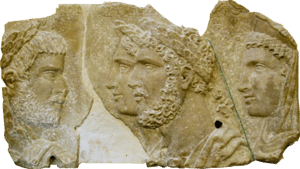
Chrétin then made remarkable discoveries that amazed the scientific community: he uncovered a dozen inscriptions and medallions referring to the Roman emperor Tetricus and his wife, a character entirely invented by Chrétin, named Néra... in reference to Nérac! Chrétin received a medal for his false discoveries, and even Prosper Mérimée, Inspector General of Historic Monuments, was fooled.
The Chrétin trial
In 1834, scholars began to express doubts, as the discoveries had no equivalent in the Gallo-Roman world. Chrétin then made the mistake of selling medallions to the City of Toulouse and the Archaeological Society of Southern France. The town of Nérac, cheated by these sales and believing it possessed genuine Gallo-Roman remains, took Chrétin to court in 1835.
Maximilien-Théodore Chrétin confessed to the deception, admitting that the bas-reliefs and medallions were merely imitations from his imagination. He then revealed the meaning of a six-letter inscription that attested to his creation and whose meaning many archaeologists and historians had sought in vain: MTCNDP... which stood for Maximilien-Théodore Chrétin, a native of Paris!
The artist-forger was acquitted and the town of Nérac, ridiculed by this affair, was condemned. The foundations were covered up, and today all that remains at the entrance to the Parc de la Garenne is a small mosaic, reminding us of the presence of this immense Gallo-Roman villa, as well as other mosaics and artifacts at the Château-Musée Henri IV and the Town Hall.