Reliquary of Saint Louis at the bastide of Lamontjoie
13th-century reliquary shrine of King Louis IX of France, known as Saint Louis, kept at the church in the bastide town of Lamontjoie.
The founding of Lamontjoie and the arrival of the relics of Louis IX
On January 1, 1298, the seneschal of Agenais, acting on behalf of King Philip IV of France, granted the inhabitants of Lamontjoie a charter of customs: this was the founding document of the bastide, confirmed on August 9, 1299, by Philip IV.
The charter of customs indicates that the bastide was created primarily for political and military reasons, to put an end to the violence perpetrated in a place called La Planha.
The King of France is considered the lord of Lamontjoie: he is its protector through his agents (seneschal, bailiff, sergeants) who pay homage to him and owe him seigneurial dues.
According to tradition, the King of France donated relics of his grandfather Louis IX, known as Saint Louis, who was canonized in 1297, to the foundation of the bastide and named it after him:
Lamontjoya sancti Ludovici (Lamontjoie of Saint Louis).
What relics?
The presence of Saint Louis' relics in Lamontjoie was part of an intensive policy to distribute fragments of Louis IX's relics following his canonization in 1297. Philip the Fair and his successors distributed relics throughout the Kingdom of France and the West.
Eight metacarpal bones from the king's hand were then sent to Lamontjoie, where they were initially kept in a reliquary from the late 13th century. At an unknown date, the ends of the bones were set in silver cabochons.
The original 13th-century reliquary
The reliquary is made of champlevé enamel, probably from the workshops of Limoges, where it was mass-produced and a few examples of which are still preserved. Its structure is made of wood covered with copper plates. The original closure system was replaced at some unknown point in time by a lock, the key to which has been lost. The interior of the reliquary could therefore not be examined...
Its shape, with a basin and a two-sided lid, evokes a symbolic sarcophagus for the bones of Saint Louis' hands. The reliquary is modest in size: 13.7 cm high, 23.6 cm long, and 7.1 cm deep.
The iconography of the reliquary includes eight medallions containing busts of angels depicted on each side of the reliquary and two others on the short sides of the container. Only the angels on the side gables of the lid do not feature medallions.
The blue background of the box is embellished with golden plant motifs, between which figurative medallions are placed, predominantly in red and white. The gilding on the copper gives the reliquary a precious appearance, similar to gold. The iconography is not related to the relics it contained, so it is likely that this box had a different original purpose.
The other reliquaries of Saint Louis in Lamontjoie
From the 13th century to the 17th century, the relics of Saint Louis were kept in the original reliquary. A reliquary bust of Louis IX then succeeded it to house the saint's relics. It is a painted wooden sculpture gilded with gold leaf.
A reliquary cross, probably dating from the 17th century, was used for processions. Approximately 30 centimeters high, the chiseled silver cross has a screw-off cap at the bottom of the shaft where a relic could be placed.
A small silver reliquary box was made in the 19th century. A display case allowed visitors to see one of Louis IX's metacarpal bones set in silver. This may be the relic that was previously displayed in the cross.
The last and current bronze reliquary was made in 1874. It still contains the relics of Louis IX. A hexagonal Gothic-style aedicule on a pedestal allows the saint's metacarps to be displayed in transparent niches. This type of reliquary, which "displays" the relics, became widespread in the 13th century and is common in modern times.
Every year, a procession of relics takes place in the bastide town of Lamontjoie on August 25, Saint Louis' Day.
Source: Bordeaux Montaigne University Collective, Une bastide pour le roi autour des reliques de saint Louis à Lamontjoie (A Bastide for the King Around the Relics of Saint Louis in Lamontjoie) – Paperback, 2014.
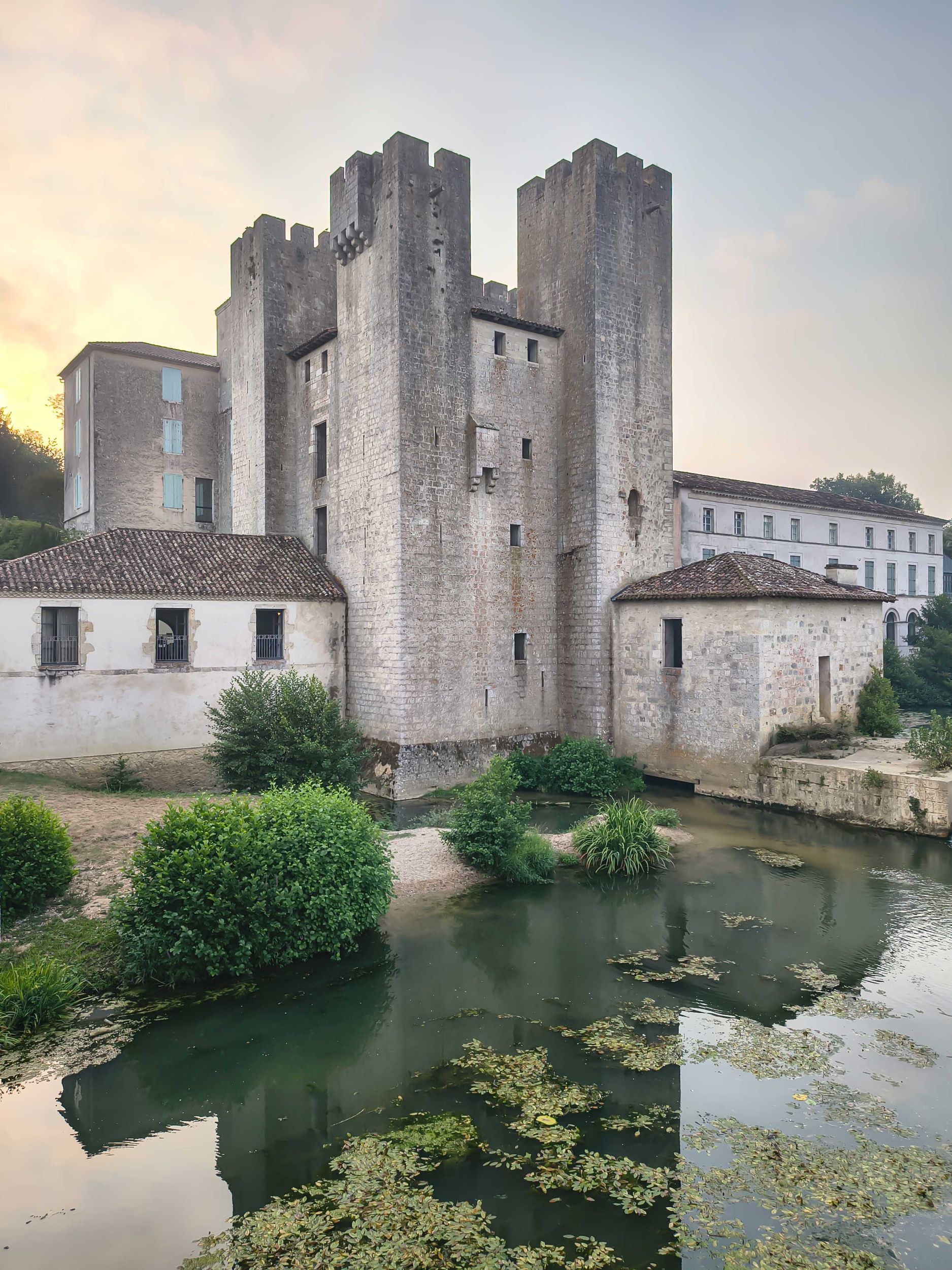
Moulin des Tours
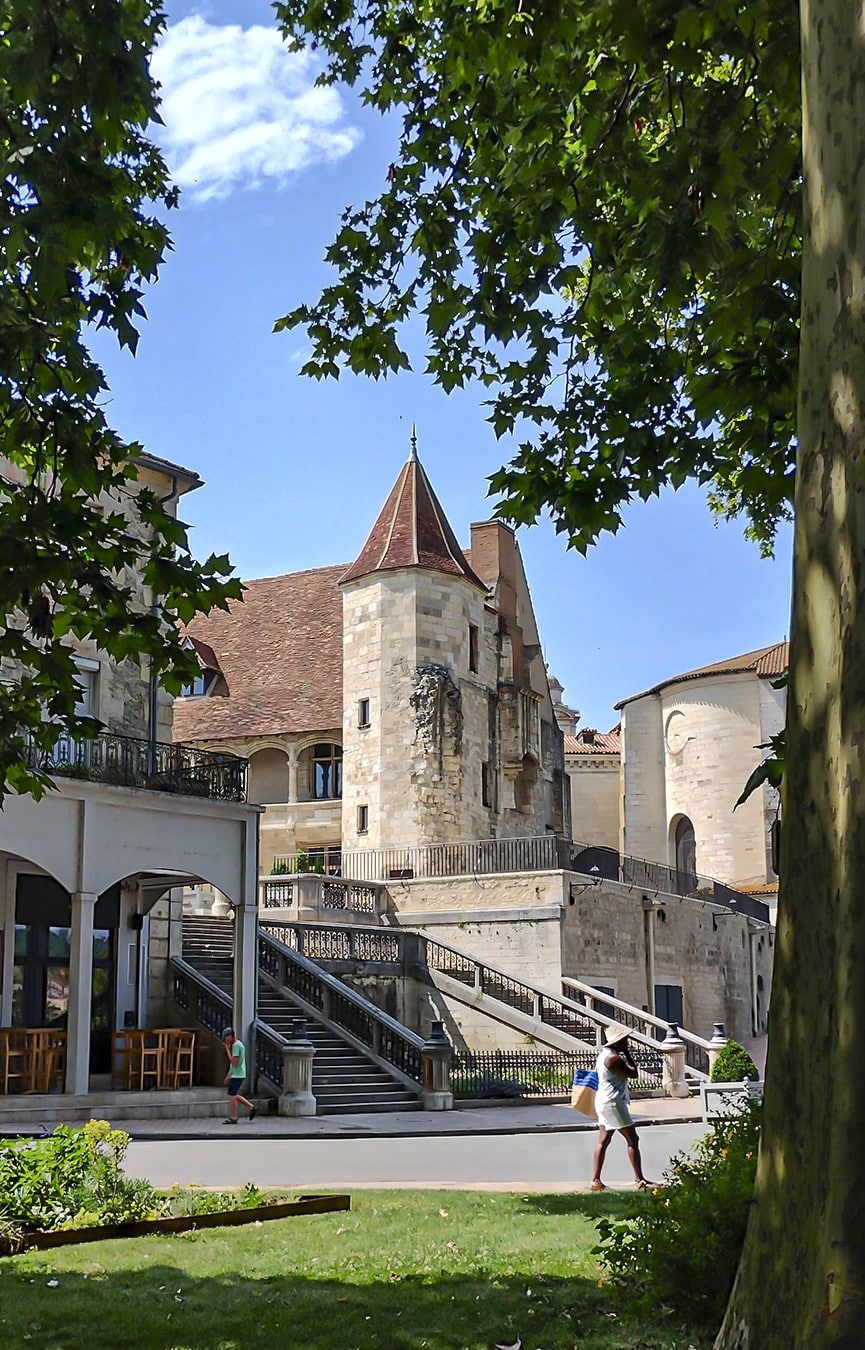
Henri IV Castle Museum
Vacances de Toussaint : les visites par Albret Tourisme
Le Moulin des Tours et le Château-musée Henri IV vous ouvrent leurs portes pour des visites, entre le 20 et le 30 octobre…
Discover the Hôtel Henri IV, a charming 3-star hotel located in the heart of Nérac, perfect for a weekend getaway, a stopover during your travels, or a relaxing stay.
Fancy a getaway to Albret? Discover the Hôtel Henri IV, a charming 3-star hotel located in the heart of Nérac—perfect for a weekend getaway, a stopover during your travels, or a relaxing stay.